WSO2 is now Choreo LabsLearn more

Trusted AI Governance
Build

Create agents and AI apps with the tools and languages your teams already use.

Connect

Link agents securely to your APIs, data, models and business systems.

Run

Deploy, observe and operate agents and AI apps reliably at any scale.

Govern

Control identity, access, cost and policy for every agent in production.

Agent Management

Developer Platform

  • API Management Cloud

    Design, secure and publish APIs with governance and analytics built in.

    Sign Up Now
  • Integration Cloud

    Connect apps, data and AI agents with low-code and pro-code integration.

    Sign Up Now
  • Identity & Access Management Cloud

    Secure sign-in and access for customers, partners, workforce and agents.

    Sign Up Now
  • Agent Management Cloud

    Build, run and govern AI agents with full visibility and control.

    Sign Up Now
  • Developer Platform Cloud

    Ship cloud-native apps faster on an internal developer platform.

    Sign Up Now

Self-Hosted

Full control over your stack. Deploy directly to your own servers, bare metal, cloud, or Kubernetes environment. Your data never leaves your perimeter.

Product Downloads
Choreo Labs
AI Governance
Platform
Solutions
Resources
Blog

Multiple CNAME records within a single gateway

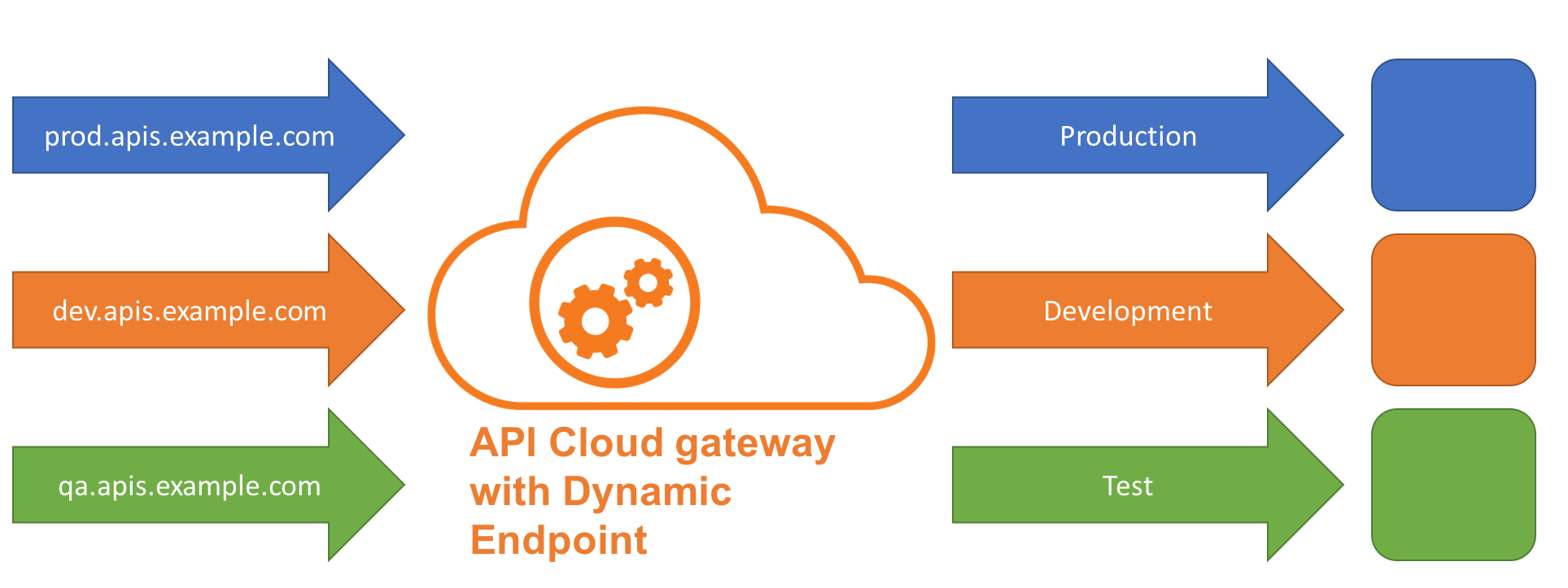
Your APIs can work with multiple backends and route calls to them based on different headers, REST resources, or even parameter values. Today we are expanding this functionality to routing based on multiple gateway URLs so the same API can, for example, serve production, development, and test environments picking the appropriate one based on the URL used for the invocation.
Typically, all your APIs share the same base URL of the gateway that you can set to a particular custom URL of your choice such as apis.example.com.

Also, starting with the Medium plan, API Cloud allows you to have multiple gateways. This is typically used by API publishers who want to have separate API gateways for different regions (for example, us.apis.example.com, eu.apis.example.com, apac.apis.example.com).

That same functionality can now be used within the same physical gateway to provide different URLs for different backend environments such as prod.apis.example.com, dev.apis.example.com, and qa.apis.example.com. In that case, you can assign them all to the same API gateway and then use the Dynamic Endpoint type to route the calls to the corresponding backend environments based on the URL used by the caller.